As part of a series of guest posts, I am delighted the first one is from my friend and colleague Ollie Smith. Ollie sadly got injured right at the start of lockdown 1.0 and in this post he tells the tale of getting back on his feet, quite literally…! It’s a long post, but a heartwarming one well worth the read.
Thank you for sharing your experiences Ollie and so pleased to have you back running again.
You can find Ollie on Instagram on @quicheslorraine.
Enjoy the post and if you’d like to share your own story or experience I love featuring guest posts on here so do get in touch.
Ele x
Shit, I’ve fractured my leg. What do I do now?
Well, I can’t say I wasn’t warned. You just don’t think it’s going to happen to you.
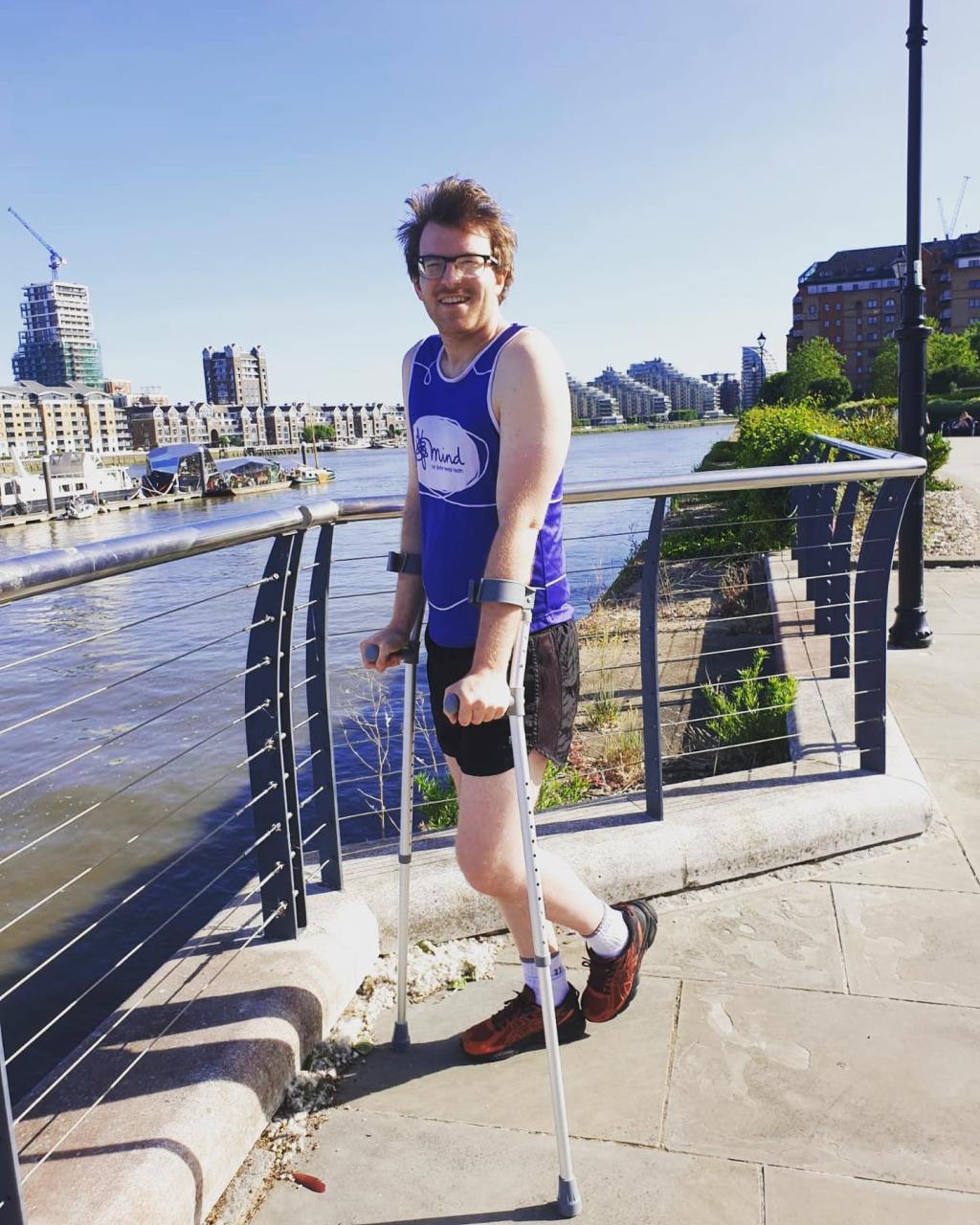
I can’t have been any more than 100 metres away from the finish line, the Thames to my right, Imperial Wharf to my left. It was the fastest I’d ever run.
The project was a sub-eight minutes and 15 seconds 2-kilometre run. I’d been on annual leave all week, and I’d gotten very worked up about completing it.
Over the past 5 months, I’d been slowly grinding my time down, clocking 8 minutes 25 seconds in April, in and among much longer runs of 15k, two half marathons, and a 30k whopper. But that week I’d attempted the 2k twice already and bottled it both times. I was angry at myself.
Now I was glancing at my watch and it was finally good news: 7 minutes and 14 seconds, with only a hundred metres to go. A 7-minute 45 time was in my grasp. Way to shave a whopping 40 seconds off a personal best.
I don’t even remember putting my foot in the wrong place, but the next thing I knew I was falling sideways into a railing, trying to steady myself with my left leg. Then the pain hit. Then the pavement hit. Then came a voice from a concerned walker behind me. ‘Are you alright?’ he asked. ‘I would help you up but social distancing and all.’ True story.
The diagnosis
It was game over. I wasn’t immediately sure what I’d done, but it hurt a lot. I got up onto my right leg, but the left wasn’t taking any weight at all. It had swollen instantly. I could feel the adrenaline kicking in to relieve some of the agony, but it didn’t last long. Off to hospital I went.
I was half-expecting to be told I had torn my ACL. A colleague had once completely destroyed his in a football match. Those sorts of injuries are life-altering if they are mismanaged. You’ll walk again but if you don’t put the hours in to your rehab you could lose full movement in your leg. I don’t mind admitting I was scared.
I sat on various hospital chairs and beds waiting for the bad news. An X-ray beckoned. Then a consultation with the registrar. No obvious break was visible, but it was clearly knackered. I was handed crutches and told to come back for an MRI.
There’s nothing an MRI won’t reveal, no stone it won’t upturn. The doctors were wrong, sort of. My leg wasn’t broken but it was fractured. My meniscus had taken a beating, and my ACL, although intact, was stretched like bad barbequed bacon. No wonder my leg felt as though it would snap in half at the knee.
My initial feeling was one of relief. I had avoided an ACL wipeout, and it would be months rather than years to get my leg back into shape. But I’m not going to act all tough about it. I was gutted, and quite upset.
Months of recovery was the working theory. The more intricate practicalities were that I was navigating the system in the middle of a lockdown, and that we were about to move house. That was by the by though. The main pain was that being on crutches fucking sucks.
We were living in a small flat and trying to move around seemed more dangerous than going outside. My crutches just would not stand up when left to one side during chores, and I came close to slipping on them on multiple occasions, simply because of a loose bit of bathwater. Then I did actually go out and it was very scary indeed. You suddenly get a thorough reappraisal of how important it is to have legs, and your conscience kicks you for ever having been so complacent about getting the milk on a Saturday.
Then came physiotherapy.
The hours
I didn’t mean to trip up and bust my leg, so I tried to avoid beating myself up too much about that stupid error (my friends do that for me).
But I knew that, when it comes to physio, you get the recovery you deserve. The harder you work, the better your outcome. If I didn’t commit to it, I’d only have myself to blame.
This was kind of personal too. My gran broke her arm and it was never really the same again because she was too much of a snob to trust her physiotherapist. My mum has had both her knees replaced, and struggled to recover because she did not, or could not, get herself moving.
I committed to it like my life depended on it. Jen, a motivational physio at the Chelsea & Westminster musculoskeletal team, showed me how to do my exercises over Zoom, and pushed me further than I thought I was capable of going. That was great.
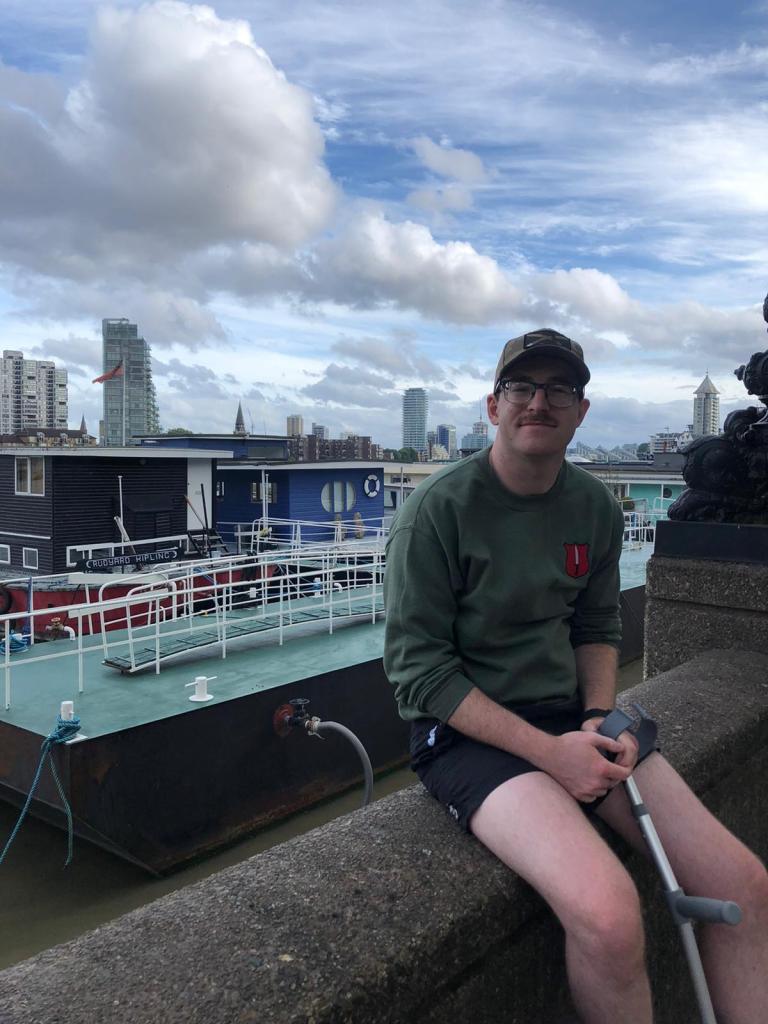
Between our sessions I was on my own, though. That was the hard part. It’s shit and it’s lonely. Thus began nearly six months of early mornings.
If you’ve never been through it or are about to, I can tell you two things about physiotherapy.
The first thing is that you should do it early in the day. It’s a pain in the arse to do consistently, so sort it well, and sort it early in the day so you’re not worrying about fitting it in.
The second thing is that it’s not a joke. There’s a certain stigma attached to physical therapies, which in my mind extends to things like yoga and pilates, but also physio. It’s exercise, but people don’t treat it like it’s serious exercise. I dare say my gran felt as much.
The truth is that it is very serious exercise, and if you treat it seriously, it will hand you serious progress very, very quickly. There is all sorts of conflicting advice out there about legs and bones and muscles, but the professionals know best. Jen was god, and as long as I did everything she said I’d be fine.
I was right. But it was tough. The first two-week phase of physio involved basic leg lifts and knee exercises and was simple enough. If you can hit the ground running with that phase two will be a lot easier.
Phase two is all about strength and conditioning, and it hurts. A lot. You’ll be doing a lot of leg and glute work, and it’ll hurt in places you didn’t even know had nerve endings. I shed a tear on several occasions, desperate for it to be over. Stick with it. Start your day right. Get it done.
The pressure lifted a bit at phase three, by which time I was in full swing. It essentially involves a lot of jumping around. The posh word for this is plyometrics. I had never heard of it before, but it was the final piece of the puzzle, before the final final piece of the puzzle: running again.
By this point I was very busy every day. I was doing 40 minutes of exercise before work every morning, with an extra 20 of plyometrics, and a 40-minute upper body workout in the afternoons to keep my top half healthy. It does not sound much but plotting it all into my diary with a boss on paternity leave and a very stressful job to do was very, well, stressful. I stuck it out, often getting up at the crack of dawn to jump around the streets of Fulham before the markets opened.
I did it
After a week of various squatting and landing exercises, the moment came to run again, and I was buzzing. Jen set me the now-intimidating task of completing Couch To 5k, a nine-week programme of three runs per week, which finishes with three 30 minute non-stop sessions in the final week.
A warning. Do not, and this is official advice, run on the same day you do your plyometrics. Plyometrics is impact training that simulates the kind of tension your legs encounter when your knees suspend your body when running. As such, you must give your body time to heal after each session.
Warning over, I did the first run, and I can honestly say it was the happiest I had been in a single moment in some time. The first session is very much baby steps, but that was enough. I ran (and walked) on the same route that I had injured myself on, and the feeling of accomplishment was absolutely phenomenal. I felt like I had made it. Jen let me go a couple of weeks later, happy that I’d made it through the process in one piece and that I was alright on my own.
After that, it was simply a case of sticking with the programme. Running in the rain suddenly became a privilege, and I got re-acquainted with those knowing glances you get from fellow runners who are hanging on absolutely chin-strapped. I felt empowered by how far I had come. Running even two kilometres in a day was a huge achievement.
I decided to continue with all the workouts and exercises until finishing Couch to 5k, so I was doing them still when we moved house (again!) a couple of weeks after that. Two weeks ago, I hit the final week, and shed another tear as I finished my first 5k in six months. The third and final one was a mere formality. My girlfriend greeted me at the finish line, and it was finally time to put the whole damn shenanigan to bed.
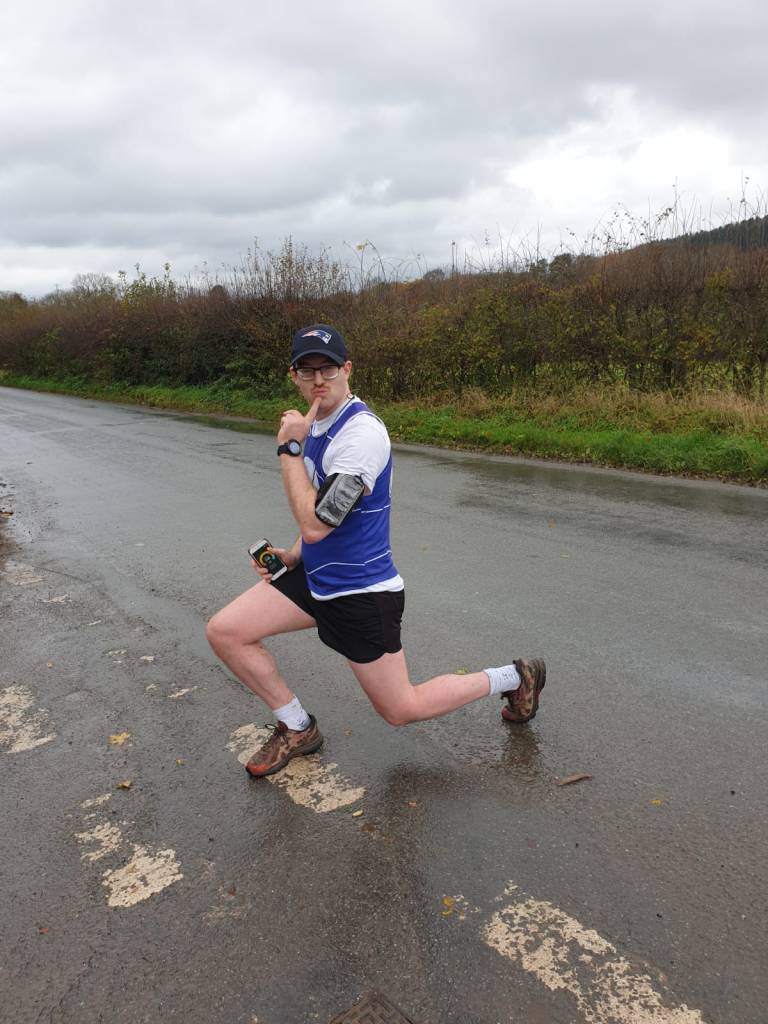
I’m not sure what to do next, but I’m still training, albeit thoughtfully. I run every other day at the moment, just so I don’t overdo it, and the next goal is to get back up to 10k, which in the Malvern hills feels like a challenge. I’d like to do a marathon next year but I don’t want to be too hasty.
I’ll let you know whether my legs are intact after the charity parachute jump I’ve got rescheduled for March. That, just like running, has a golden rule for all participants. Watch where you put your feet! You have been warned!
 chasingele.com