
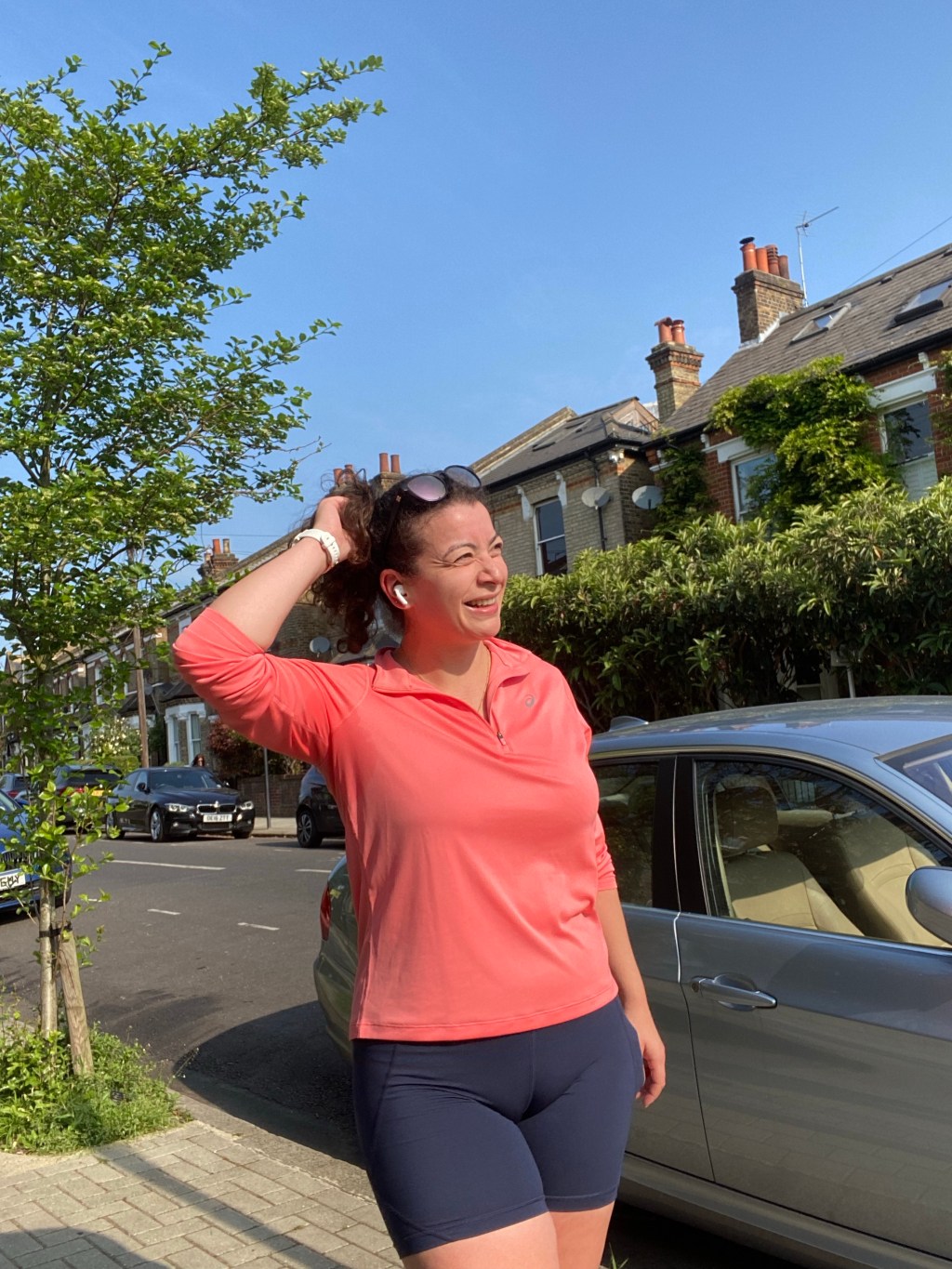
I am a HUGE advocate of the run/walk method of running. Yes, that’s right – method of running. I will always stand by the fact that if you’ve gone out for a run and run for even just a part of it, you’ve gone for a run. It’s really quite simple.
Some people seem to put a stigma on walking whilst you’re out on your runs or they put so much pressure on themselves to just run continuously even if they’re really struggling – as if walking and listening to your body is a bad thing *rolling my eyes*
I am currently on a return to running programme having recovered from a ruptured ACL ligament injury in my knee. I have always been a fan of including walks in my runs when I need to or when I feel like it, but returning with this injury has forced me to do it in a more structured way which has been GREAT. I’ve really enjoyed it.
I’ve pulled together some of my top reasons for including walk breaks on your runs and I’ve gathered some thoughts from some pals in the running community too – huge thanks to Emma, Ruth and Jenna for sharing their thoughts for this post!
From my own experiences, walking on your run:
- Are perfect for beginner runners who are building up their experience, fitness and longevity in running. Walk breaks are quite literally the FOUNDATION for Couch to 5k – which is arguably the biggest step up into running for people that we have ever seen
- Helps to bring your heart rate down and let your system regulate itself from a high-impact cardiovascular activity
- Brings down your overall pace, which on an easy run or a recovery run is exactly what we should be doing – we don’t need to be finding speed on these runs
- Makes it easier to run with your dog, chat with a friend or run errands
- Helps to break up your run into chunks, which is a really helpful mental tip
- Allows you to reset in your walking section, which can be helpful for both beginner runners and the most experienced amongst us
- Helps you acclimatise or adjust to temperatures, especially in the summer or if you are running abroad
- Allows you to build back up from injury, post-partum, or simply a break from training
- Can be done in whatever way suits you – a structured format, as you fancy it, on all your runs, or just some of them – you’re in charge
- Is super enjoyable – and allows you to pause for a moment and take that photo for Instagram!
So it is TOTALLY ok to walk on your run because, remember, it’s YOUR run and you can do what you want. If it gets you moving and smiling, it’s ok with me.
And just in case you’re not quite convinced, here are some experiences from other runners:
Jenna – @running_in_real_life
‘The reason I enjoy run/walk is that I feel less pressure – physically and mentally – to achieve something just because others can do it. After some injuries, I found that continuous runing, however much I slowed down, was leaving me physically fatigued and mentally drained. I couldn’t reach the mileage I wanted, was dreading my next session, and kept finding reasons not to go. I decided to switch to run/walk intervals (I like 4 minutes run and 1 minute walk, or I run the flats and downhills and walk the uphills). I can now go much further, with less fatigue and discomfort and I don’t feel like I need to prove anything to anyone. I’m enjoying running again!
A run/walk strategy is really welcomed across the running community these days and at events like Parkrun, I feel as much a Parkrunner as those who run the entire 5k.’
Ruth Rebecca – @ruth_rebecca_
‘Couch to 5k and interval training was the best thing I did to get myself to running 5k initially. I combined it with some social runs with a local club which also encouraged breaks, and I know I would never have enjoyed running was it not for this. I used to feel self conscious taking walking breaks, but I soon realised that nobody cares! It was by interval training that I built up to running 5k, 10k, and then a half marathon, so I know it works!
Running for me is mostly for my mental health and to enjoy myself, so if I need to walk for a bit, that’s ok. Everyone’s running journey is completely different so it doesn’t matter what anyone else thinks.’
Emma – @emmasrunning
‘Jeffing – named for Jeff Galloway, who popularised the most well-known run/walk method – involves running interspersed with frequent short walk sections. Both the run and walk sections are usually short, with the walk section no more than 30 seconds. The walk is brisk – it’s not a break! – and this keeps the momentum up throughout the run.
I started Jeffing to return from an injury that is common to many new runners – shin splints. They were the result of trying to run too far and too fast within a year of starting running consistently. At first, I found Jeffing tricky – it felt as if I’d be getting into a good pace while running before having to slow to a walk again. But over time, I learned to embrace that transition between paces, so it didn’t feel as awkward, and began to really enjoy Jeffing. Even when I started incorporating straight running back into the mix, I found myself preferring the runs I Jeffed. There was little to no difference in my pace, but I finished the run feeling less exhausted and less like I was on the verge of another injury! So, I made the decision to switch to Jeffing all my runs and I haven’t looked back!
Jeffing allows me to keep my easy runs truly easy, as it’s much easier to keep my heart rate down with frequent 30 second walk sections. It enables me to run harder on my tempo or interval runs, as I can push more during the runs. It lets me to run further, as by adding in walk sections my body is experiencing micro-recoveries throughout, making it easier to keep going for longer – both physically and psychologically.
There are no downsides to Jeffing! I’ve run a sub-2-hour half marathon and 3 ultramarathons (amongst many other races!) using the method. It has both physical and psychological advantages and can be used by absolutely anyone. Instead of pushing your body to the point of exhaustion, or just generally struggling through a run, Jeffing allows you to implement a strategy that helps conserve energy and keeps you running for longer more comfortably. And who wouldn’t that?!’
What works for you and what advice would you give someone else wondering whether it’s ok to walk on their runs? Let me know below!
Ele x
 chasingele.com