
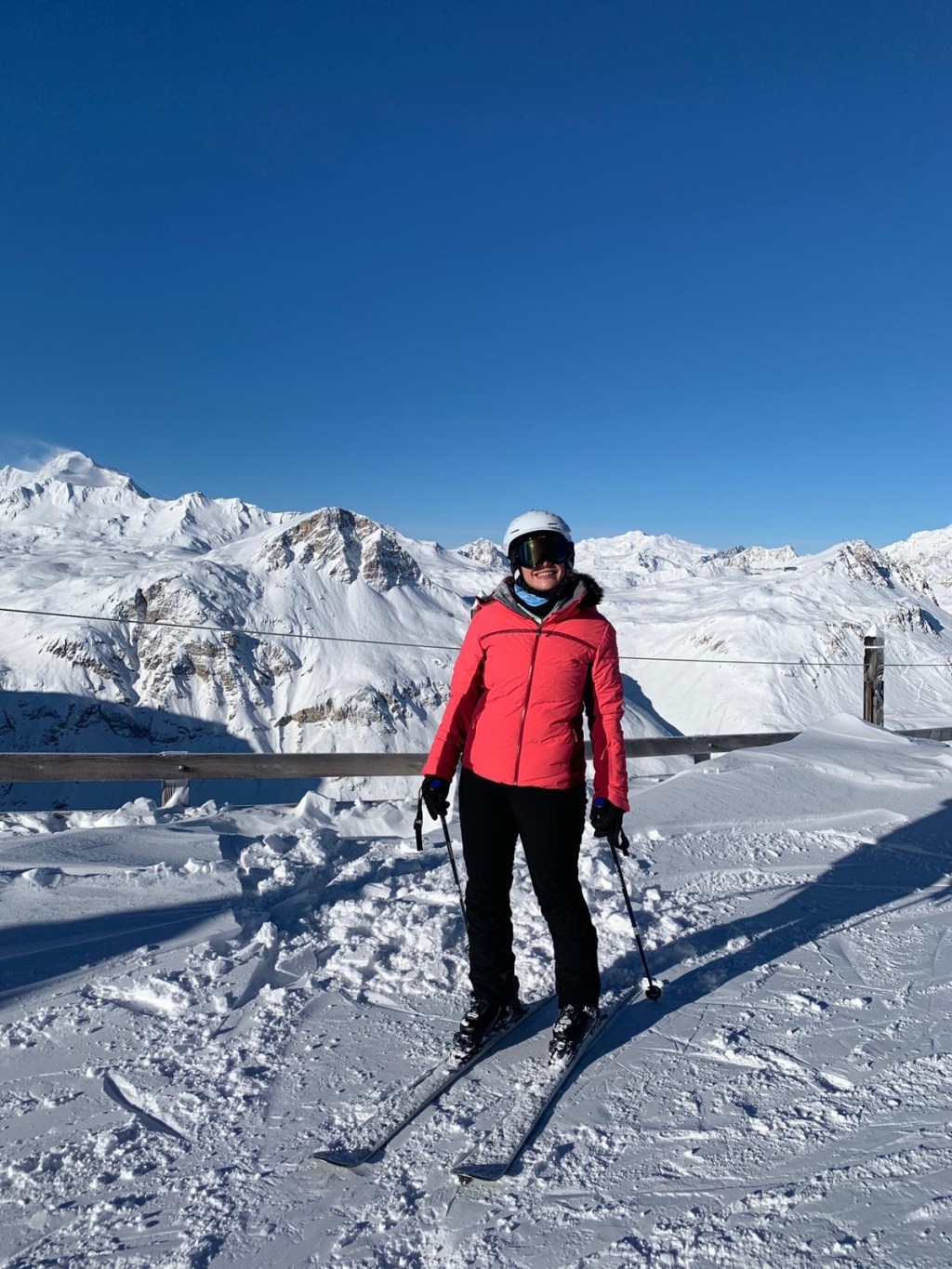
In January this year I came home from my skiing holiday with a little more than I bargained for – a knee injury, a big old knee brace and a lot of pain and discomfort. A dodgy skiing fall led to me fully rupturing my ACL ligament in my knee and spraining my MCL ligament. If you don’t know what that means, rupturing essentially means ripping the ligament off. Ouch. My skis didn’t unclip so they twisted underneath me which was what caused the injury. It was incredibly painful and NOT a feeling I would wish on anyone.
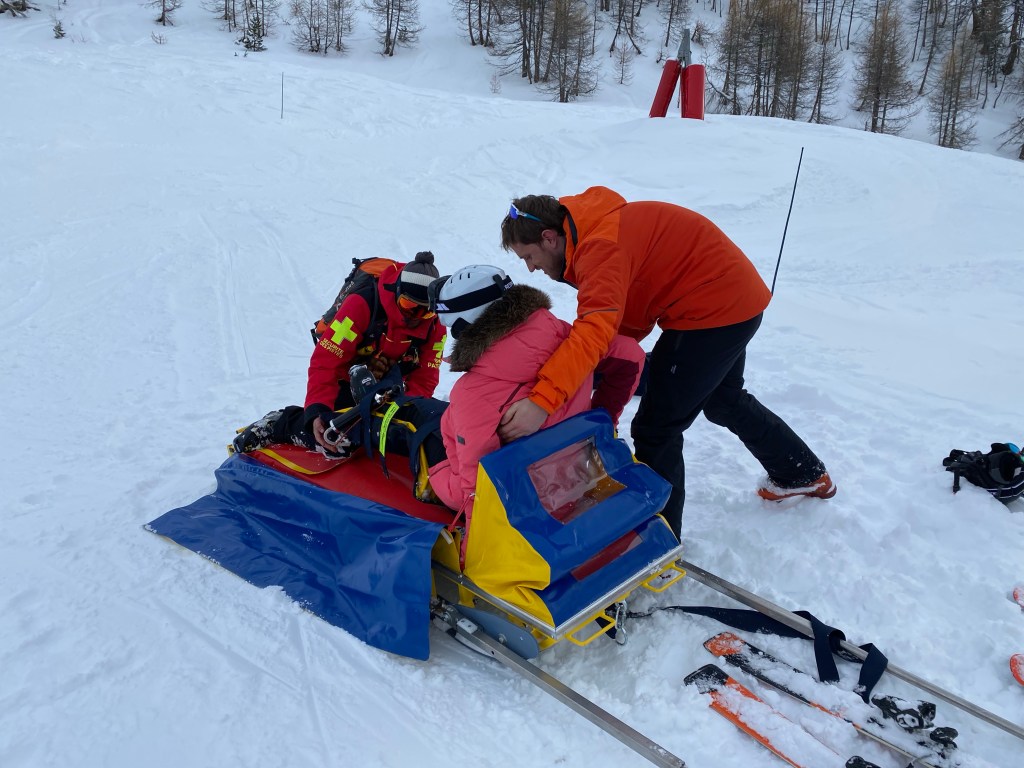
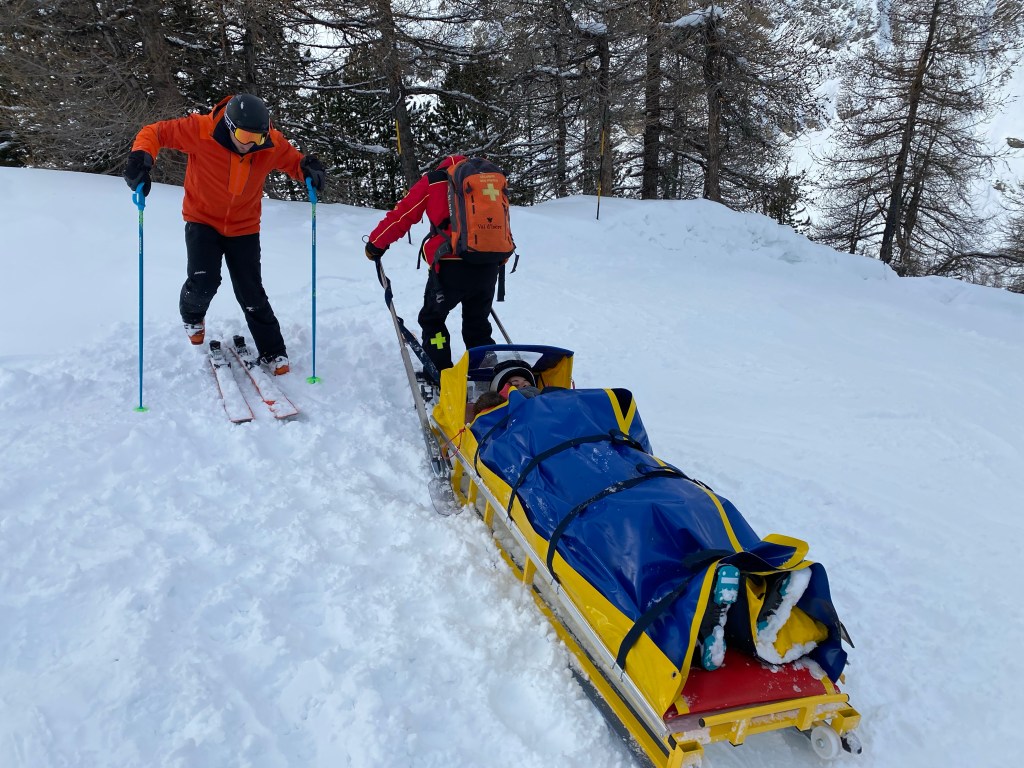
I couldn’t ski down the rest of the run, so had to call the piste rescue guys. A very handsome French man came and rescued me off the mountain (evidence below!) and took me to the medical centre in town, where they saw to me. After spending the rest of the holiday with my knee VERY swollen, braced up and elevated and an uncomfortable journey home, I made it back to London where I headed off for an MRI scan and to see a knee consultant who confirmed the diagnosis. A few weeks of rest, leg up, icing, and gentle walking was my outlook to get the swelling in the knee down before any next steps were taken. There was certainly no running allowed!!
This obviously sucked and whilst this blog post is generally very positive, it’s worth being clear that I spent plenty of time feeling sorry for myself, jealous of others, and frustrated at what had happened. However, the sooner you can come to terms with what’s happened, the longer you have to adjust to it.

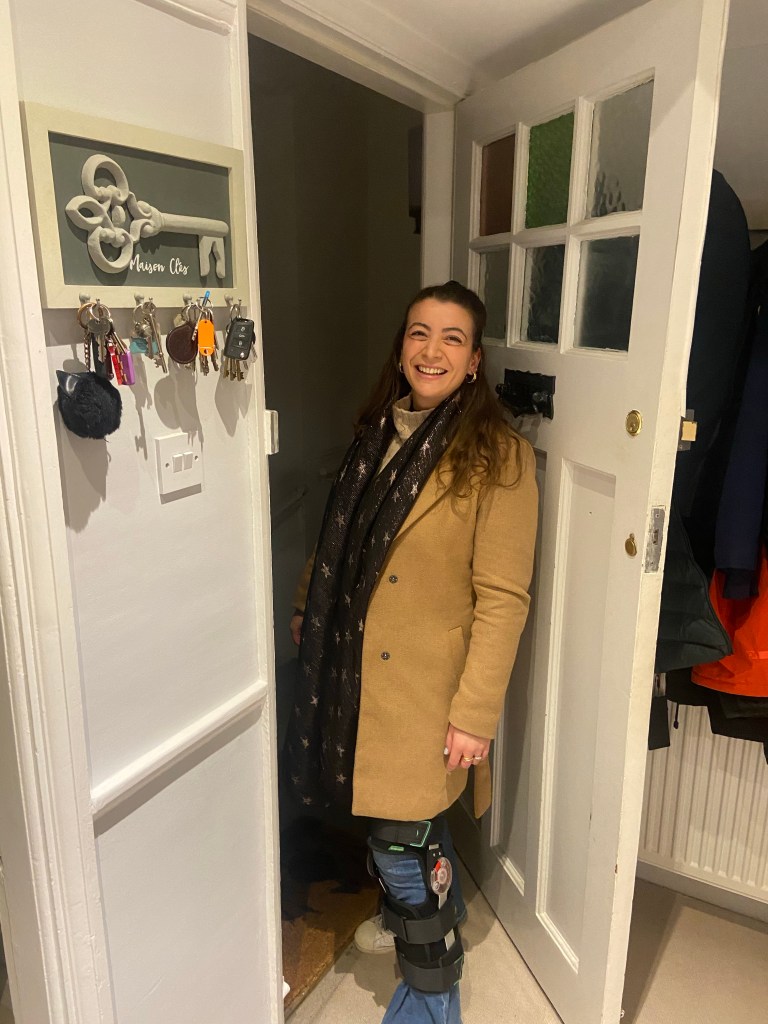
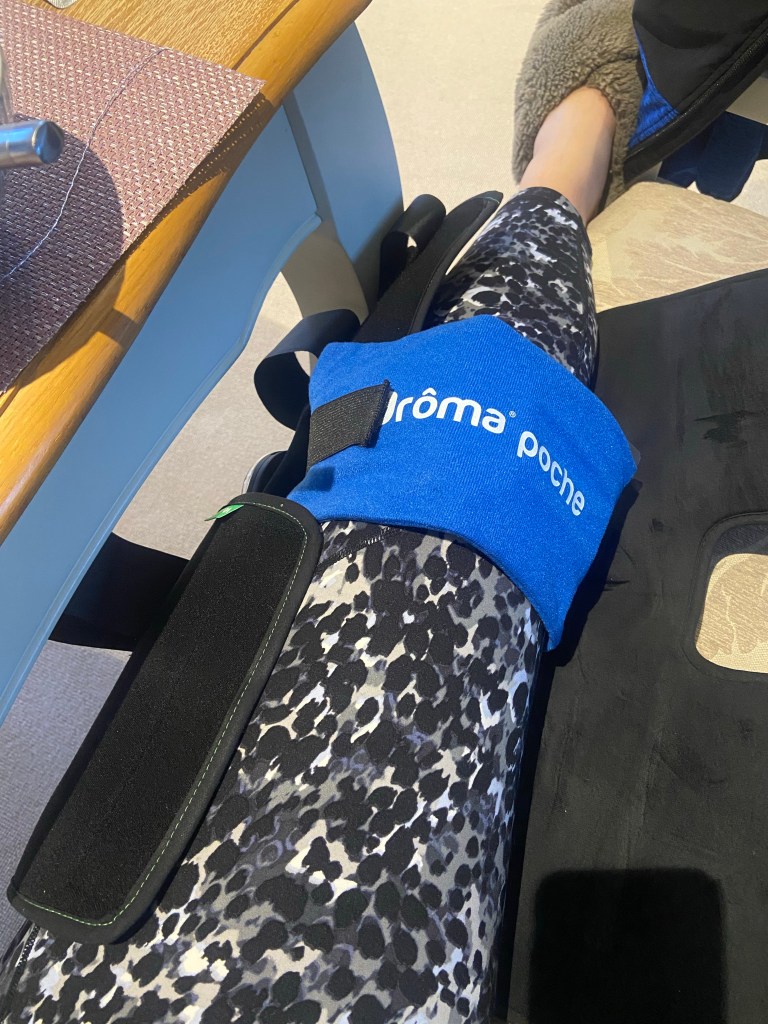
From there, I could choose whether or not I wanted to have knee reconstruction surgery which would repair the ligament completely, or choose a more conservative rehabilitation route with a good physio. Both have their pro’s and con’s but after a lot of toing and froing, I opted to go for the rehabilitation route rather than have the surgery. I just figured if I could avoid surgery then I would. After a few weeks of rest I wasn’t too uncomfortable, I was walking mostly normally and the external swelling had largely gone down. I also had selfish reasons – having knee surgery in the same year as getting married (yay) wasn’t really my idea of fun. So – with the help of my consultant, I made the choice to not have the surgery at this point in time. I was reliably told that I couldn’t make the injury worse, the damage was done, but I could always come back to the surgery option if I needed it or if the conservative treatment didn’t work out.
At the end of February, about 6 weeks post injury, I was given the go-ahead from my consultant to start working with a physiotherapist and get moving again. This was GREAT news because by this point I was dead bored of not being able to exercise and mostly not being able to run. I had come to terms with my injury fairly early on, having been through the anger and upset stages already, and by this stage I was just frustrated with not being able to do what I was used to.
So I very promptly contacted a local physio who could help me with my rehabilitation programme. Over lots of sessions with him I worked on some basic exercises that I could do at home and he measured things like my internal swelling and my leg strength, and we progressed to bodyweight exercises like squats, lunges and hinge movements to test how my knee felt with the load and the bend. So far so good, and we moved onto weighted exercises targeting my core and leg muscles. After a couple of weeks I was given the ok to go to the gym and try out a few of these things myself. I was told to focus on the leg press and leg extension machines at the gym which target your upper leg and quad strength. I am still working on those machines now as I write this post – they are a large part of the long term ACL rehab programme. I began writing down notes on exactly what weight I started at for various exercises, with the goal being to visibly be able to track progressively getting stronger at them.
It wasn’t too long before I was also given the ok to try spin classes too – indoor cycling was great to get my legs and muscles moving again without there being too much pressure on the knee. This was a great move for me as I could get that exercise and sweat fix that I had been missing! Shout out to Digme studio in London for being my fave rehab classes.
Things progressed well and the spin classes, strength work and physio training wasn’t aggravating my knee at all. The swelling was down, I wasn’t in pain and I could essentially move totally normally. I was starting to progress my exercises and weights at the gym and so we did some jumping practice together at the physio and with everything feeling ok, I was then told I could start a gentle return to RUNNING. Finally the words I’d been waiting for. This was at the end of March, so 3 months post injury.
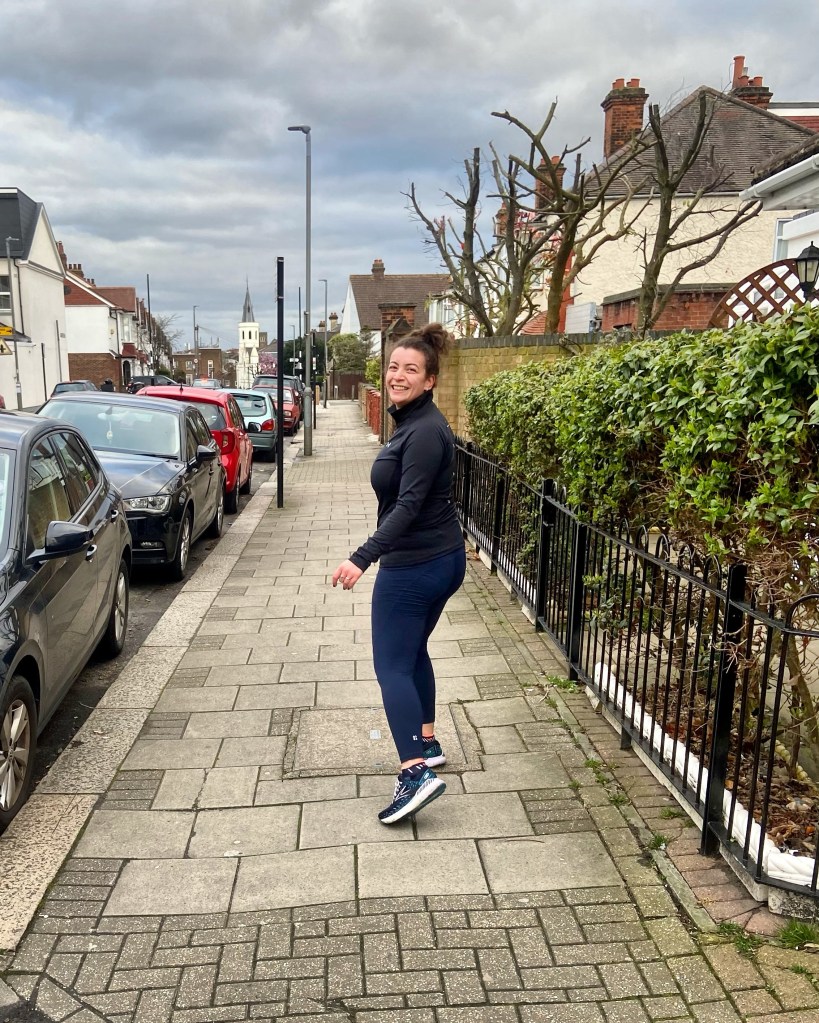
A nice prescription of 8 x 2 minutes running and 1 minute walking was my starting point. Humbled and happy, I was overjoyed to get back out. It all felt a bit stiff and funny at first, but it didn’t take long for my legs to remember what they were doing. Over several weeks we built up from 2 minutes running to 3, to 4, to 7, to 10 – and onwards. The gentle increase was brilliant not only to physically avoid too much load through my knee at once, but also for my fitness – which let’s be honest, had taken quite a hit after not running for a while.
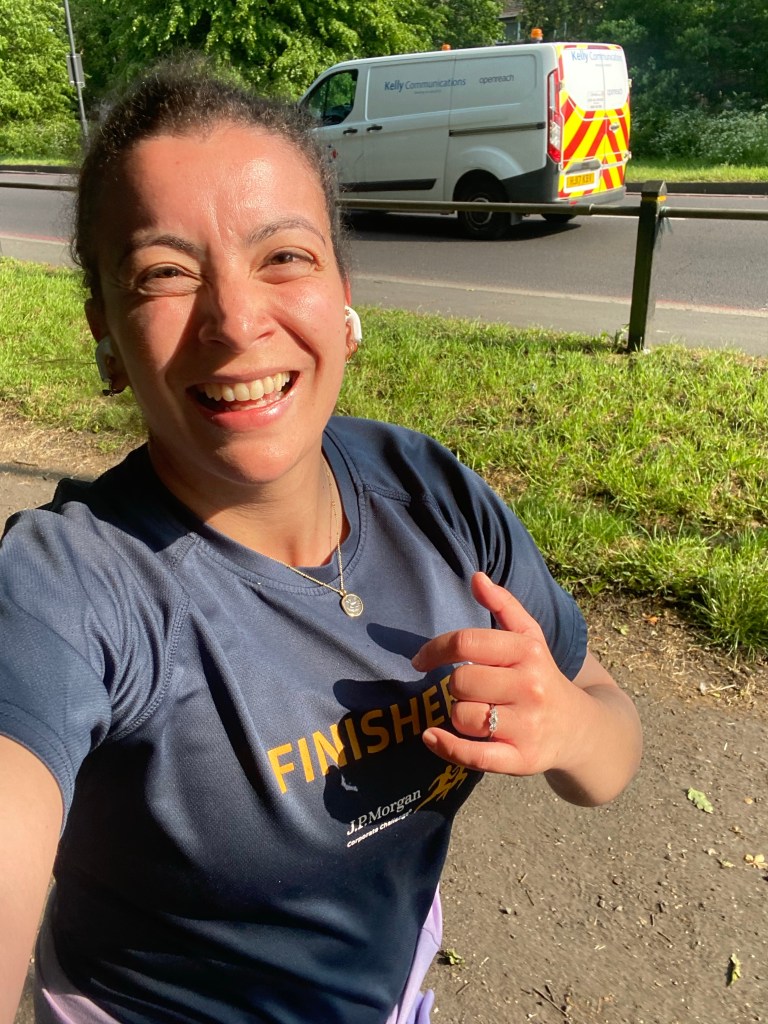
As I write this I’m still utilizing my run/walk programme but I can tell that it is going well and that I can keep going for longer without my knee causing me any trouble. I have been given the all ok from my knee consultant and am seeing my physio less regularly. At the time of posting this, I’ve just done my first 30 mins of continuous running and my first continuous 5k at Parkrun. The plan now is to build up time and distance and fitness, with an aim to be comfortably running 5-10k’s across the summer before my wedding in September.
I’m also really enjoying focusing on strength work at the gym and seeing how I can lift more as time goes on. This is great not only for my knee rehab, but for being a stronger runner in general. For the first time ever I am still writing down notes on my sessions and writing down what I’m lifting and how it’s progressing. One of the things my physio told me was that part of the reason I reacted well to my rehab was that I was already relatively strong when the injury occurred – I’ve generally always enjoyed going to the gym, so this is a PSA to not neglect that, you never know when it’ll help you out more than you’ll know.
I am SO happy that my mind and body has got me back to running and so this post is not only my story for me to look back on in the future, but also to share with any other injured runners – particularly anyone suffering from an ACL injury – that it does get better and you can get back running again. It takes some patience and some effort on your part, but lacing up again is so worth it. Your body is stronger than you know and it will bounce back!
My top tips if you are in a similar position:
- Accept the diagnosis as soon as you can and start to understand what you need to do to get back to where you want to be
- An injury like a ruptured ligament is not a broken bone yet it is still a huge trauma to the body – let it heal in the best way
- Listen to your physio and do what you’re told!
- Focus on strengthening your quads, hamstrings, calf, glutes and core – your physio/consultant/trainer should help you with exactly what to do
- Do not do anything that aggravates or hurts the injury – pain is your body’s way of telling you something is wrong there
- If you are deciding whether to have surgery for your injury, make sure you get all the information relevant to YOU, your lifestyle and the activities that are important to you – being well informed will allow you to make the best choice for you
- Be patient with your return to running – it may be slower than you want, but you’ll get back to where you once were
- Enjoy the return and enjoy the little steps – progress over perfection any day of the week!
Ele x
 chasingele.com